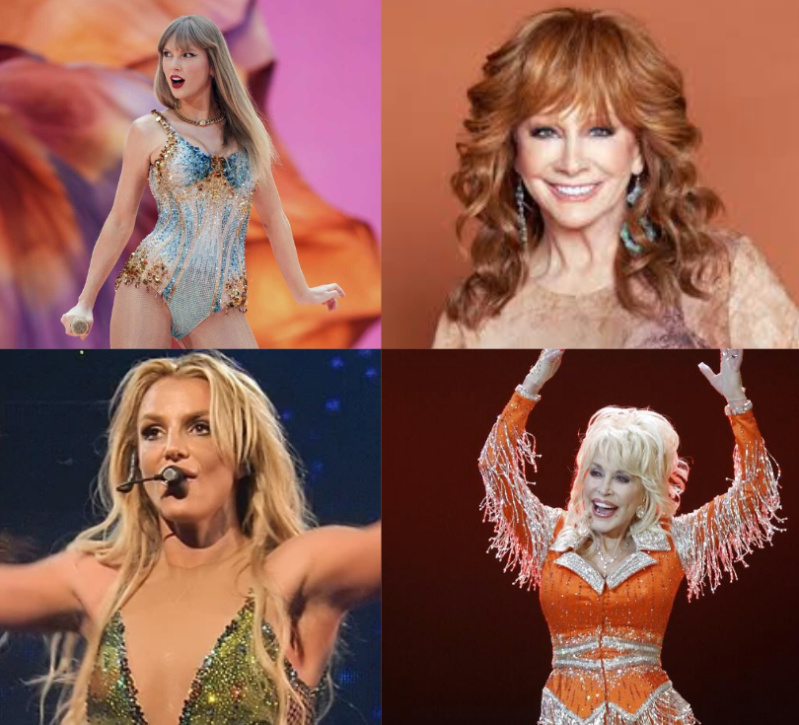
Does the Music Industry force Artists out?
Sarah Barthlow, Sydney Wert, Miley Rutherford, Lizzy Stegmaier
Ageism is a societal concept that pushes people out as they age. This predominately affects women and can be seen throughout the workforce. Furthermore, NWSA Journal writes that ageism can affect, “connections between power and economy, and the plethora of works on body-based identity categories.” This explains that although ageism seems like it would only affect beauty standards and physical problems. It can also be translated into fiscal issues and lower a woman's ability to become powerful as she ages. This can be seen in women in the music industry. By showing 3 examples of women who have been affected by ageist norms, leading to struggles in their career, we can see how women are predominately affected.
Reba McEntire
Known as the Queen of Country Music, Reba McEntire, started at 19 by singing the national anthem for a rodeo in Oklahoma, and she would one day become the biggest female country music star of her time. Throughout her life Reba has been a singer, a Hollywood actress, a Broadway lead, a Voice coach, and at one point, she even had her own tv show. While she had many achievements throughout her life and still hopes for more, she was not a quick rise to fame. Reba was first signed by Glenn Keener, but when she first started to get into the music industry, she had many years of recording with no results. She eventually had her first top 20 hit when she released a cover of Patsy Cline’s “Sweet Dreams.” This led to many more top hits, awards, and achievements throughout her years of fame, but was she ready to leave the industry when she was seemingly forced out of it?
Reba is currently 71 years old, and much of the younger generation has stopped hearing about her entirely. Former Reba fan, Bree Wert, said in an interview that she remembers listening to Reba and hearing her songs on the radio frequently when she was younger, but now can’t remember the last time she heard one of Reba’s songs come on the radio. Despite this, Reba has shown no signs of leaving the industry anytime soon. In 2001 she started her own show, “Reba.” The show aired for six seasons and would finish airing in 2007: earning her a Golden Globe nomination for Best Performance by an Actress in a Television Series. The show “Reba” is one of 11 movie credits the singer has.
Throughout her life Reba has also won 16 Academy of Country Music Awards, 15 American Music Awards, nine People’s Choice Awards, and six Country Music Association awards. After her long reigning career and many achievements, retirement is a topic she has addressed in many interviews.
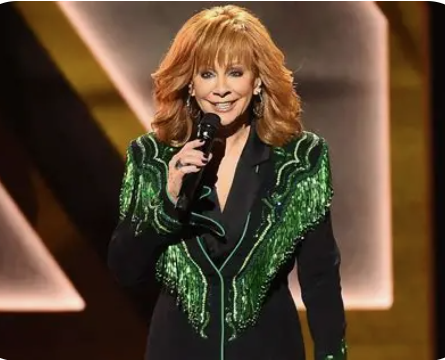
Reba McEntire Performing at one of her concerts.
In December 2025, when Reba was doing a cover story for People Magazine, she stated that while she does plan on slowing down some, she does not plan on retiring anytime soon. But, if this is true, why have we almost stopped hearing about her entirely? Despite all she has done to stay in the industry, Reba is constantly overshadowed by younger and newer artists, possibly making it difficult to continue her career as she had hoped.
Britney Spears

Brittney Spears performing at one of her concerts.
The music industry has a long history of celebrating young female artists while quietly discarding them as they grow older, often before they have had the chance to evolve on their own terms. Female artists are frequently confined to narrow expectations of youth, beauty, and marketability, and when they begin to age or assert independence, their popularity is framed as declining rather than changing. Britney Spears’ career clearly reflects this pattern. From her rapid rise as a teenage pop icon to the way she was treated later in life, her experiences show how the industry pushes women out long before they are finished creating or connecting with audiences.
Britney Spears entered the spotlight as a teenager and was immediately shaped into a controlled image, childlike and plastic. In the Los Angeles Times timeline, it states she became a global star at sixteen with the release of Baby One More Time in 1998.
Her success came with intense marketing and constant public attention, especially from the paparazzi. The paparazzi even took it as far as following Spears in a high-speed car chase where they ran red lights and committed many traffic violations. However, as she entered her twenties attention shifted away from her music and toward her personal life. Her highly publicized relationship with Justin Timberlake and their 2002 breakup led to heavy media backlash that portrayed her negatively. By 2007, during her divorce from Kevin Federline and custody battles, media coverage became invasive and exploitative for Britney. Her public struggles were treated as entertainment rather than a sign she needed support, marking a turning point where the music industry began to distance itself from her as an artist.
The documentary Britney vs Spears shows how control over her life was taken away just as she reached adulthood. In 2008, she was placed under a conservatorship that limited her control over her finances, career, and personal decisions. Despite this, she continued to release successful albums like Circus and Femme Fatale and completed a profitable Las Vegas residency. This contradiction is important to highlight because she was capable of performing and making millions of dollars, yet she was not trusted to make her own choices. One narrator said, “Britney is no longer a free person. She doesn’t have basic human rights. She can’t write a check or have a credit card.” This level of control prevented her from evolving naturally and on her own terms and reinforced the idea that she was no longer an independent artist.
As she aged, the industry's support declined even though her influence and popularity remained strong. The Celeb Post article highlights how she was overlooked by parts of the industry, reflecting the pattern of aging female artists being pushed aside. For example, during the height of her conservatorship, she was not invited to perform or be honored by major award shows like the Grammys or MTV VMAs, events where she had once been a fan favorite. This absence highlights how the industry shifted its attention away from her, even though public interest in her life and music remained strong. In 2021, her court testimony about her conservatorship drew lots of attention, and its termination showed that audiences were still invested in her and her music.
These events reveal a pattern where the industry reduces opportunities for female artists and then treats their decline as a loss of popularity. Spears’ career challenges that idea, because not only did she maintain cultural relevance and a loyal audience, but she was denied the freedom to evolve publicly. Overall, her story shows that the declining presence of older female artists is not natural, but the result of an industry that prioritizes youth over long term artistic growth.
Taylor Swift
Taylor Swift, the pop singer who recently grossed $ 2 billion from her globally impactful Eras Tour, recently turned 36. This marks another year in her impressively long career that has now spanned almost 25 years. Swift has addressed her aging multiple times throughout her career, discussing how she is “depressed about pop culture's obsession with youth culture” (Business Insider). Furthermore, her career has been one of the most relevant examples of ageism in the music industry and how it disproportionately affects female artists. Swift faces this through the criticism she has faced throughout her career, specifically that of her constant reinvention. Swift states in her 2019 documentary Miss Americana, that she, and many other female artists, are “Constantly having to reinvent, constantly finding new facets of yourself that people find to be shiny. [To] Be new to us, be young to us.” This quote shows that throughout her career; Swift has felt pressure to be constantly changing in order to stay fresh and young in the audience’s mind. The Boar, a collegiate newspaper run by students similar to Swift’s audience demographic, solidifies Swift’s statements, writing, “Reinvention, however, creates a sense of freshness, female artists unfortunately forced to play into innocence to stay relevant.” By expanding on how a constantly changing career can signify youth in female artists, The Boar reinstates Swift’s theories about how ageism has affected her.
Furthermore, Swift has mentioned how she feels as though male artists are not held to these same standards. Specifically in her documentary, Swift delves into how gender can shape the course of a music career and how the effects of aging differ between men and women. She states that male artists are not equally expected to refresh their style, music, or persona as frequently as women are in the music industry (Miss Americana). Furthermore, male artists are seen as timeless and unaffected by ageism more so than women due to misogyny and societal views on women. Swift also discusses how men are treated differently within her industry in her song “The Man.”
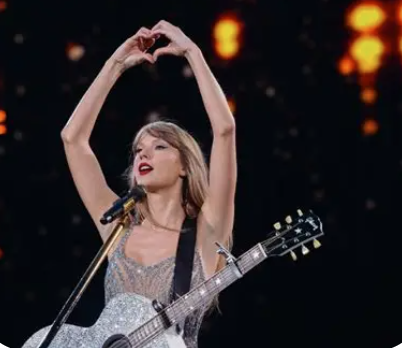
Taylor Swift performing during her Eras Tour.
She sings, “I’m so sick of running as fast as I can/ Wonderin' if I'd get there quicker if I was a man.” This is saying that she views her career as moving more slowly and being more complicated than a man's. Moreover, within the context of aging, this concept can be seen in older male artists who are not forced to reinvent because they become cultural staples faster in their careers than women.
Overall, ageism can be seen through Taylor Swift’s career by putting pressure on her to reinvent and be perceived as fresh and new to her audience. Additionally, Swift is disproportionately affected by ageism because she is a woman who has had a long music career and is approaching 40.
Dolly Parton
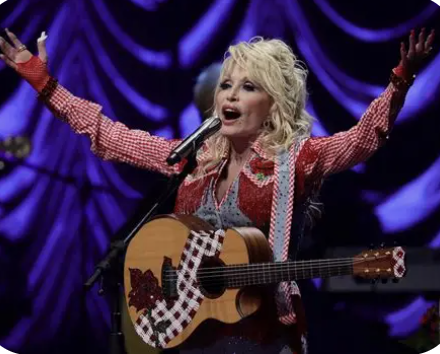
Dolly Parton performing at one of her concerts.
Dolly Parton, one of country music’s biggest household names, got her start when she was just ten years old. Over the past seventy years, she has worked very hard to achieve greatness despite the disadvantages in her life. Now, eighty-year-old Dolly has managed to remain relevant and authentic, even with the changing industry.
Dolly Parton grew up in a heavily male-dominated world. She didn’t come from money and was often simply perceived as a pretty, naive, and young blonde, a role she sometimes tapped into. For instance, in an interview with Rolling Stone, Parton expressed her thoughts on a woman’s most important task as being a man’s companion (The Parton Paradox, page 75).
While Dolly Parton may not always identify as a feminist, she is seen as a strong female figure due to all the adversity in her life she has faced. In her career specifically, she has experienced being silenced by the industry when radio stations refused to play three of her songs, songs she predicted to be hits (Dolly Parton Reveals 3 Songs That Radio Refused to Play: 'They Were Saying It Was Vulgar').
Popular songs change with time, as new artists and albums are brought to fame. Dolly Parton has had a career in music for the past seventy years. With a rapidly moving industry that favors youthfulness and fresh talent, she has had to find ways to stay relevant. Being an icon and a role model for many fans, including younger musicians, has helped her stay in current conversations, but Dolly has taken action to be timeless. Loyal Dolly Parton fan of over fifty years, Eric Brown, said that Parton “Transcends time,” and added that she’s a “stable quality.” Dolly Parton has earned a lot of respect because she has stayed true to her morals, values, and beliefs throughout her entire life. Eric said his perception of Parton has never changed over time because she “never forgot where she came from.” Dolly Parton is also active in giving back to those in need. One of the ways she’s done this is by donating $700,000 to those in need after Humphrey County’s unexpected flooding in 2021(Dolly Parton’s Most Charitable Moments: From The Dollywood Foundation to Natural Disaster Donations). Aside from being a philanthropist, Dolly Parton has stayed active in the studio.
In November of 2023, Dolly Parton released her rock and roll album, Rockstar. Later in February of 2024, she was featured on Sabrina Carpenter’s hit song “Please Please Please” from her album Short n’ Sweet (Deluxe). The album Short n' Sweet was a huge hit for Sabrina Carpenter, as it earned her two Grammys, among several other awards. Being featured on Carpenter’s deluxe album, Dolly Parton got the attention of old fans and was introduced to new ones. By dropping singles and being featured on songs with current big names, Dolly Parton has managed to keep her name in current conversations surrounding music. While the industry may try to push older artists into the shadows, Dolly Parton persevered and has stayed an active icon in country and rock and roll music.
Ageism is not simply about appearance or a few wrinkles, but access to power, opportunities, and financial stability. The examples discussed reveal a consistent pattern in which women are pushed aside as they age, and in some cases, limiting their ability to sustain long-term careers and influence. This reflects the broader societal structures described earlier, where age intersects with gender to reinforce inequality in both representation and economic standing. Addressing ageism requires challenging the norms that devalue women over time and recognizing their continued contributions, ensuring that success and authority are not confined to youth but remain accessible throughout a woman's life.
Create Your Own Website With Webador